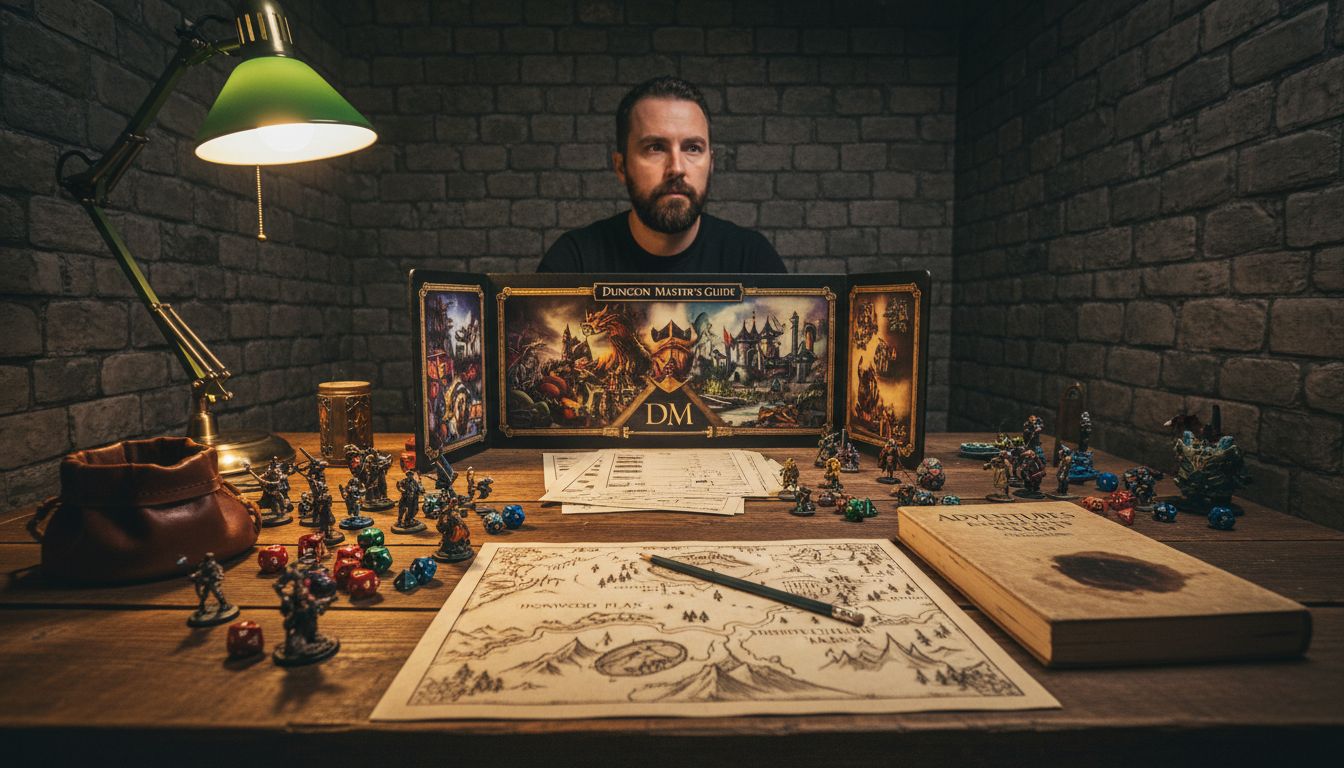
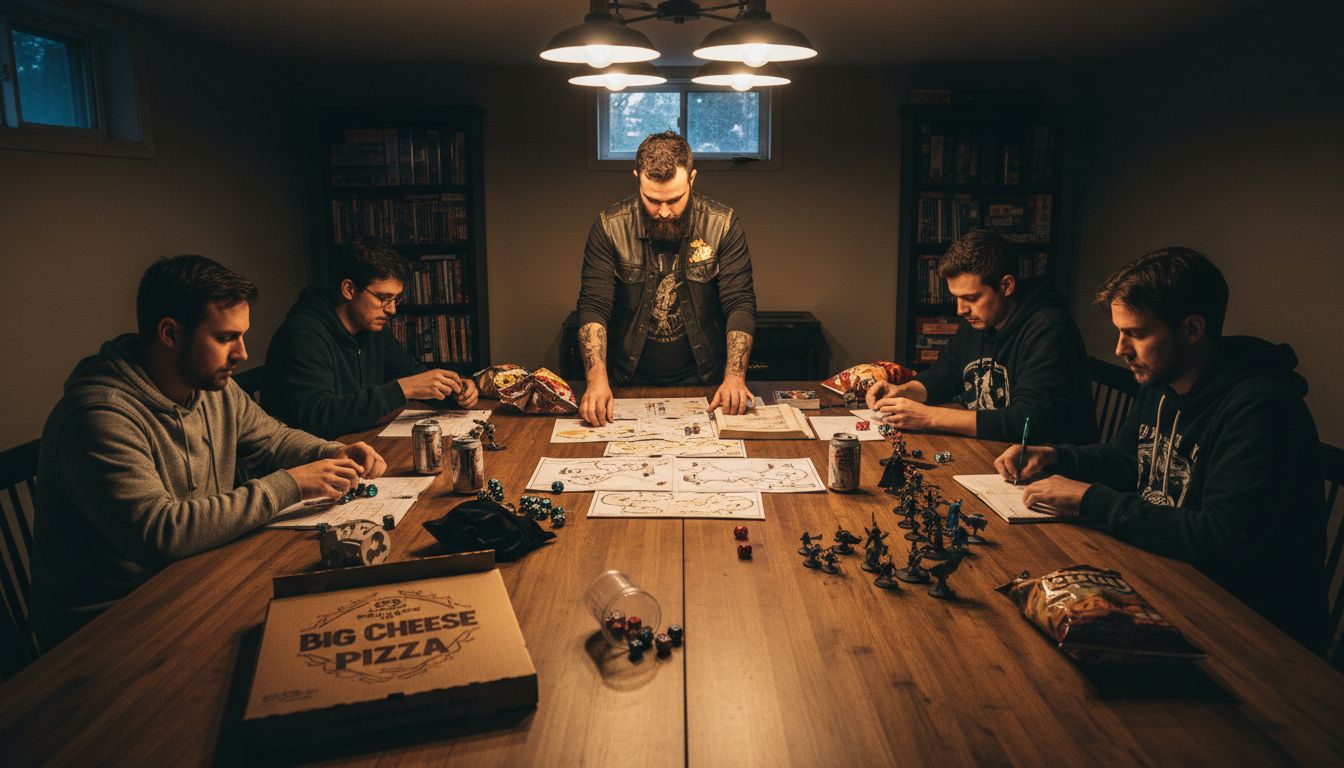
How to Organize Game Table for Seamless TTRPG Sessions
Most American tabletop roleplayers know that an organized gaming space can make or break the story. When every player has enough room for their dice, journals, and character sheets, friendships and adventures grow stronger. Studies show that even small improvements in layout and setup can boost group focus by over 40 percent. If you want your next session to run smoothly and feel truly immersive, making thoughtful decisions about space and tools is the first step to a better game night.
Table of Contents
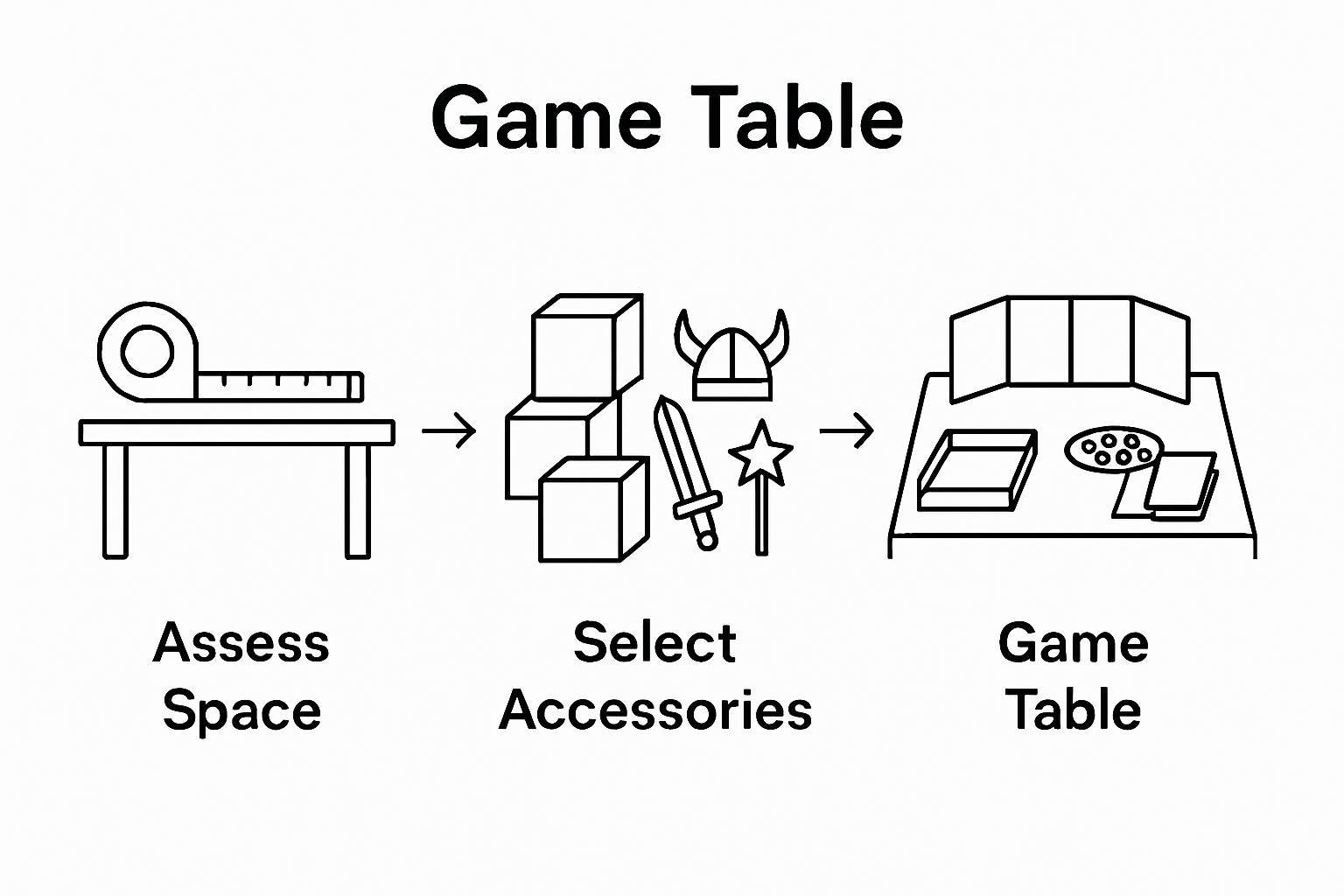
- Step 1: Assess Game Space And Player Needs
- Step 2: Select Thematic Organization Accessories
- Step 3: Arrange DM Screens And Essentials Strategically
- Step 4: Optimize Dice, Tokens, And Journals Placement
- Step 5: Verify Accessibility And Table Flow
Quick Summary
| Key Takeaway | Explanation |
|---|---|
| 1. Assess your gaming space first | Evaluate your game area and what players need to ensure comfortable engagement during sessions. |
| 2. Choose multifunctional organization accessories | Select items that not only organize but also enhance the campaign’s thematic atmosphere for deeper immersion. |
| 3. Strategically position DM materials | Arrange the Game Master’s screen and tools for easy access, maintaining interaction and storytelling flow. |
| 4. Optimize placement of game essentials | Organize dice, tokens, and journals for quick access to minimize disruptions during gameplay. |
| 5. Verify accessibility and table flow | Ensure all players can interact comfortably, accommodating physical needs and facilitating easy movement around the table. |
Step 1: Assess game space and player needs
Designing the perfect tabletop roleplaying game setup starts with a strategic evaluation of your physical environment and group dynamics. Before diving into accessories and organization, you need a clear understanding of your gaming space and player requirements. The right setup can transform an ordinary game night into an extraordinary storytelling experience.
Begin by measuring your available gaming area and considering the number of players. Aim for a table that provides at least 24 inches of personal space per player, ensuring comfortable dice rolling, character sheet management, and miniature placement. Consider the room’s layout and potential obstacles like lighting, electrical outlets, and nearby storage. Players with different physical needs might require specific accommodations such as accessible seating, good lighting, or ergonomic chair arrangements. Some gaming groups prefer circular tables for better interaction, while others work best with rectangular surfaces that offer clear sightlines.
Pro tip: Always leave extra space for rulebooks, snacks, and unexpected game master props. A cluttered table can quickly become frustrating and disrupt the immersive experience. Think of your gaming space as a collaborative storytelling environment where each player needs room to engage fully with the narrative and their fellow adventurers. By carefully assessing your space and player needs upfront, you set the stage for seamless, memorable roleplaying sessions.
Step 2: Select thematic organization accessories
With your game space assessed, the next critical step is curating organization accessories that enhance both functionality and narrative immersion. Thoughtful resource management can transform your tabletop experience through strategic accessory selection, turning your gaming setup into a storytelling command center.
When choosing accessories, prioritize items that serve multiple purposes and reflect your campaign’s aesthetic. Consider magnetic DM screens that offer quick information access, modular storage solutions for miniatures and dice, and themed campaign journals that match your game world. Look for accessories with practical features like built-in reference panels, secure compartments, and adaptable configurations that accommodate different game styles. Leather bags with dedicated sections for rulebooks, character sheets, and gaming tools can streamline your setup while adding a touch of immersive style.
Pro tip: Select accessories that not only organize your materials but also contribute to the narrative atmosphere. A well-chosen GM screen with intricate artwork or a handcrafted dice tower that matches your campaign setting can elevate the entire gaming experience. Remember that organization is more than just storage it is about creating an environment that sparks imagination and keeps your group fully engaged in the unfolding adventure.
Step 3: Arrange DM screens and essentials strategically
The Game Master’s command center is the heart of your tabletop roleplaying experience. Effectively organizing your game materials can dramatically improve storytelling and gameplay flow, transforming your setup from simple setup to narrative command post.
Position your magnetic DM screen to create a functional barrier that keeps your game notes and reference materials private while remaining accessible. Angle the screen slightly toward you for easy reading, but not so dramatically that it blocks player interaction. Arrange your essential tools within immediate reach such as initiative trackers, monster stat blocks, random encounter tables, and quick reference sheets. Place dice rolling areas strategically, preferably on raised surfaces or dedicated dice trays to prevent accidental rolls and maintain game momentum. Consider using modular organizational systems that allow you to quickly swap out reference materials based on your current campaign or encounter needs.
Pro tip: Think of your DM screen as a dynamic storytelling tool. Keep it adaptable and maintain clear sightlines with your players. A well organized screen allows you to seamlessly transition between narrative moments and game mechanics without disrupting the immersive experience. Your goal is to create a setup that feels like a natural extension of the storytelling process rather than a rigid administrative barrier.
Step 4: Optimize dice, tokens, and journals placement
Creating a streamlined gaming experience requires strategic placement of your tabletop essentials. Thoughtful organization of game materials can transform your roleplaying session from chaotic to seamless, ensuring every player has quick access to their tools.
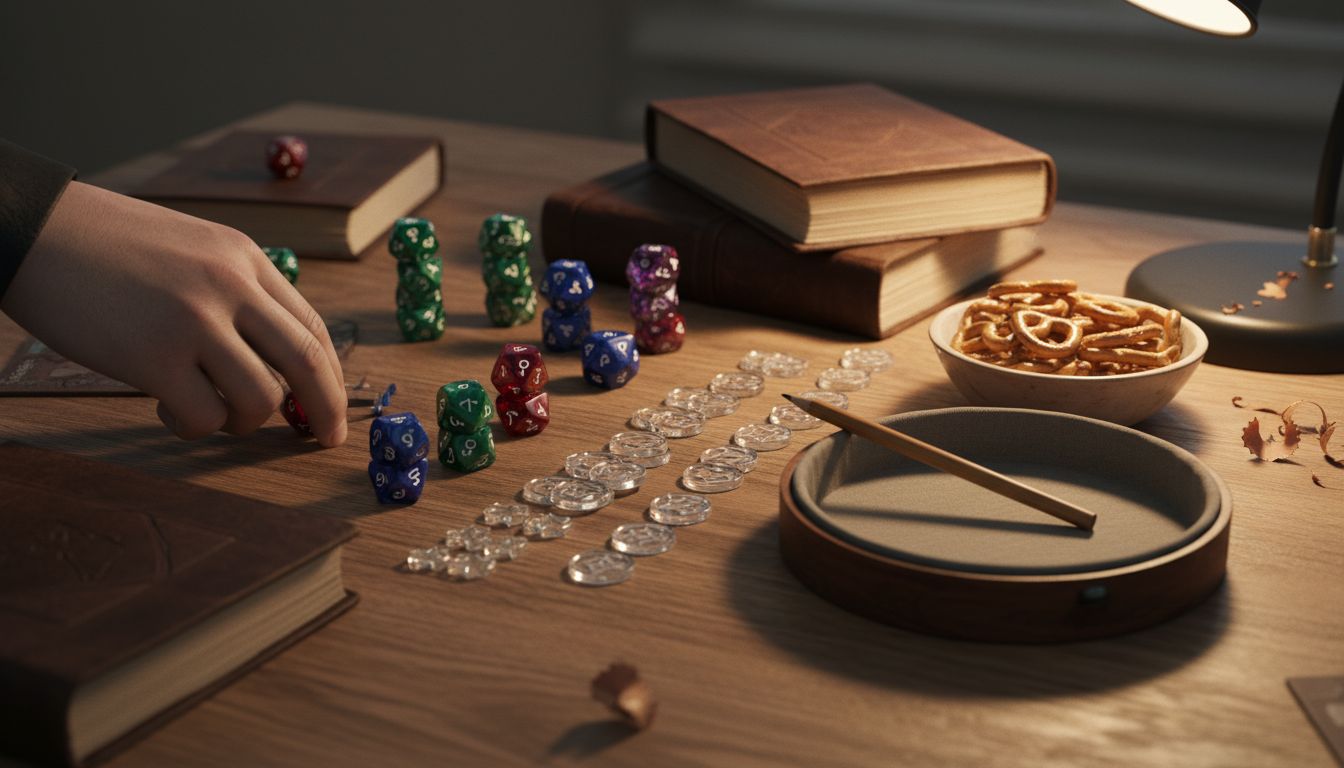
Design a personalized system for dice and tokens that minimizes disruption during gameplay. Utilize dedicated dice trays or rolling areas positioned within easy reach of each player. Consider color coded or themed dice sets that not only serve a functional purpose but also enhance the visual storytelling of your campaign. For tokens and markers, implement a modular storage solution like magnetic clip on containers or tiered organizers that allow rapid access without cluttering the table. Place campaign journals within arms reach but slightly separated from active play areas to prevent accidental spills or damage. Group similar items together miniatures in one zone, reference cards in another to create intuitive spatial memory for all players.
Pro tip: Treat your gaming materials like a living ecosystem. Regularly reassess and adjust your organizational strategy based on how your group actually plays. What works perfectly in theory might need tweaking in practice. The goal is to create a setup that feels natural and supports the narrative flow without constantly interrupting the immersive storytelling experience.
Step 5: Verify accessibility and table flow
The final crucial step in organizing your tabletop RPG space is ensuring every player can comfortably engage with the game. Strategic space allocation supports diverse player interactions and creates an inclusive gaming environment, transforming your setup from merely functional to truly immersive.
Conduct a comprehensive walkthrough of your table layout from each player’s perspective. Confirm that everyone has clear sightlines to the Game Master, easy access to their character sheets, and sufficient personal space for dice rolling and miniature placement. Consider physical accessibility needs such as adequate leg room, comfortable chair height, and unobstructed pathways for players who might need to move around. Test the flow by simulating gameplay movements like reaching for rulebooks, consulting reference materials, or moving miniatures. Pay special attention to potential bottlenecks or areas where players might feel cramped or disconnected from the shared narrative space.
Pro tip: Think of your table setup as a living, breathing ecosystem that requires constant fine tuning. What works perfectly in one session might need adjustment in another. Regularly check in with your players about their comfort and invite feedback on the table layout. The most successful gaming groups are those willing to experiment and adapt their physical space to support storytelling and player engagement.
Elevate Your TTRPG Table Organization with Fabletop Accessories
Organizing your game table to achieve seamless TTRPG sessions is a challenge many dungeon masters and players face. The article highlights critical pain points such as maintaining clear sightlines, creating accessible storage for dice and tokens, and establishing a thematic yet functional command center. If cramped spaces, cluttered dice areas, or scattered game materials disrupt your storytelling flow, you are not alone. Properly assessing your gaming space and strategically placing essentials can transform the way your group experiences each adventure.
Fabletop understands these challenges and offers solutions that marry functionality with fantasy-inspired design. Our premium collection of magnetic DM screens and modular organizational tools provides exactly what the article suggests: a customizable, immersive setup that empowers game masters and players alike. Enhance your campaign with our beautifully crafted campaign journals and durable leather bags for secure gear storage. These thematic accessories do more than just organize—they create an atmosphere that sparks imagination and keeps your sessions running smoothly.
Ready to transform your tabletop roleplaying experience? Discover how Fabletop’s tabletop gaming accessories can help you master the art of organization and storytelling today. Take control of your next game night by visiting our full collection and equip your table with the essential tools designed to inspire and sustain unforgettable adventures.
Frequently Asked Questions
How do I assess my game space for TTRPG sessions?
Begin by measuring the dimensions of your gaming area and evaluating how many players will participate. Ensure each player has about 24 inches of personal space for a comfortable experience while considering the layout to minimize obstacles.
What types of organization accessories should I select for my game table?
Choose multifunctional accessories that match your campaign’s aesthetic, like modular storage solutions for dice and miniatures. Items like themed journals, magnetic DM screens, and built-in reference panels can enhance both organization and immersion.
How should I arrange my DM screen and essential materials for optimal gameplay?
Position your DM screen at a slight angle for easy visibility while keeping the essential materials within arm’s reach. Organize initiative trackers, monster stats, and reference sheets for quick access to maintain gameplay flow.
What is the best way to place dice and tokens during TTRPG sessions?
Utilize dedicated rolling areas or trays for each player to minimize disruptions and maintain focus. Organize tokens and miniatures in separate zones to create an intuitive layout that all players can easily navigate during gameplay.
How can I ensure accessibility and smooth table flow for all players?
Verify that every player has clear sightlines to the DM and adequate space for rolling dice and managing their materials. Regularly assess the layout and gather feedback to adjust the setup for comfort and engagement, allowing space for movement and interaction.
Recommended

Written by Josh Joseph